Black Mold?
Don't Take Chances! Call the Top Black
Removal Company in Wheeling and get cleaned up FAST!



Why Choose Us?
- Certified Pros
- Available 24/7/365
- Rapid Response
- Fully Licensed And Insured
- We Work With Your Insurance Company
Call Now (847) 200-0170
Professional Mold Removal in Wheeling, Illinois
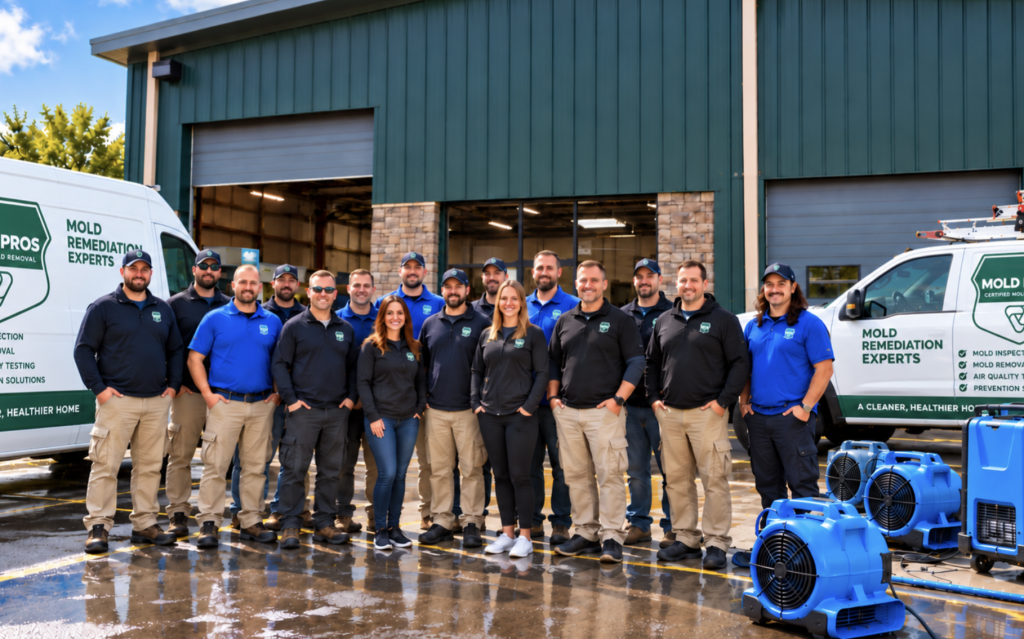
Finding mold in your home or business raises practical questions about safety, cleanup, and what happens next. Our team at Wheeling Mold Remediation Pros focuses on controlling the affected area, removing damaged porous materials, and cleaning surfaces that can be restored. We also look for the moisture source so the problem does not simply return after cleanup. The work plan changes for drywall, insulation, carpet, framing, concrete, tile, attics, and crawl spaces. This page explains what our mold removal service includes, what falls outside the scope, and how local building conditions can affect the work.
What Can Cause Mold Problems in Wheeling Properties?
Professional mold removal starts with a careful review of the affected area and the moisture conditions around it. We identify visible growth, water-damaged materials, nearby surfaces, and paths where dust could spread. Containment uses plastic walls or barriers to separate the work area from unaffected parts of the building. We use protective equipment and HEPA filtration to reduce airborne dust during removal and cleaning.
Porous materials often need removal because mold can grow below their visible surface. Drywall, insulation, carpet, carpet padding, and some wood products can hold moisture and growth in places normal wiping cannot reach. Concrete, tile, metal, and other hard surfaces often receive detailed cleaning when their condition allows restoration. Framing and subflooring require extra care because they can look dry while retaining moisture in joints, seams, or hidden layers.
Source control is part of the work because cleanup alone does not correct an active leak or damp condition. Common sources include plumbing leaks, roof leaks, HVAC condensate problems, appliance leaks, and wet basement conditions. In Wheeling, heavy rain, rapid runoff, and drainage problems can affect below-grade rooms and foundation areas. Properties near Buffalo Creek, McDonald Creek, the Des Plaines River, or the William Rogers Memorial Diversion Channel need address-specific flood and drainage review rather than assumptions based on the village as a whole.
What’s Included
- Work-area protection: We establish containment where needed and protect nearby unaffected areas from dust and debris.
- Removal and cleaning: We remove affected porous materials and clean suitable hard surfaces using controlled procedures and HEPA filtration.
- Moisture-focused work: We identify visible moisture conditions and address the mold-related cleanup scope connected to the affected area.
The exact scope depends on the materials, location, and extent of visible or hidden damage. A basement with wet drywall needs a different plan from a bathroom ceiling with surface growth. Attics may involve roof leaks, poor ventilation, or bathroom and dryer vents that end in the wrong location. Crawl spaces may involve damp soil, missing vapor barriers, limited access, or moisture around joists and subflooring.
What’s Not Included
- Major reconstruction: Rebuilding walls, replacing finished flooring, painting, cabinetry work, and broad finish repairs are outside mold-removal cleanup.
- Unrelated repairs: Plumbing, roofing, drainage, HVAC, foundation, and electrical repairs are not automatically included in the mold scope.
- Independent testing: We do not perform mold testing or identify a mold species from its appearance.
Cleanup and removal are different from reconstruction. We can address affected materials within the mold-remediation scope, but a separate trade may be needed to repair the leak or rebuild finished areas. Property owners should also check whether permits, inspections, or floodplain requirements apply before reconstruction begins. The Village of Wheeling Community Development Department provides information about permits and inspections for local properties.
How do materials change the cleanup plan?
Drywall and insulation usually require careful removal when they are porous and visibly affected. Carpet and padding can hold moisture beneath the surface, especially after a sewage backup, appliance leak, or basement flood. Wood framing and subflooring may remain in place when they are structurally sound and can be cleaned and dried, but concealed moisture still needs attention. Concrete and tile are not automatically free of problems because dust, grout, cracks, and attached materials can retain contamination.
Attic and crawl-space work often involves limited access and a different moisture pattern from finished living areas. In an attic, roof leaks, poor ventilation, or a vent that terminates indoors can wet roof sheathing and insulation. In a crawl space, exposed soil, drainage issues, and damp air can keep the underside of the building wet. High summer humidity in the Chicago metropolitan area also makes condensation and poor dehumidification important considerations.
People commonly use the term black mold for dark-colored growth, but color alone does not identify a species. The cleanup plan is based on the material, moisture source, location, and extent of affected areas. Independent testing or assessment can help when the extent or type of a problem needs separate documentation. For a deeper explanation of warning signs, testing limits, and immediate steps, see our mold warning signs guide.
How do residential and commercial projects differ?
Homes often involve basements, crawl spaces, attached garages, bathrooms, kitchens, and occupied bedrooms. Apartments and condominiums may require attention to shared walls, neighboring units, building managers, and repeated moisture sources. Commercial properties along Milwaukee Avenue, Dundee Road, and Lake-Cook Road can involve larger work areas and more complex access planning. Offices, schools, medical facilities, retail spaces, warehouses, and industrial buildings may also need occupancy and inspection coordination.
Commercial work should account for business operations, employees, customers, stored materials, and building systems near the affected area. Containment and work scheduling need to protect areas that are not part of the cleanup. Local commercial projects can also involve Village building inspections, fire-code coordination, or site-development requirements. We do not assume that a commercial building has the same moisture risks as a nearby home.
What affects the scope and cost?
Actual mold remediation costs vary based on affected materials, work-area size, containment needs, access, and the moisture source. A small bathroom area may involve limited removal, while a flooded basement may include walls, flooring, insulation, and hidden cavities. Sewage or flood-related damage can require more controlled handling than a dry surface with isolated growth. Final scope and price require an inspection of the affected conditions.
Flood exposure is also site-specific in Wheeling, especially near mapped floodways and drainage channels. The Village maintains flood-map information and floodplain-determination services that can help property owners review a parcel before planning reconstruction. Current FEMA and Village maps should be checked before structural work, drainage changes, or rebuilding in a potentially regulated area. This review is separate from the physical mold-cleanup work but can affect project planning.
Credentials and work standards
Wheeling Mold Remediation Pros is IICRC certified. We are in good standing with the BBB. These credentials do not replace a site review, and they do not make every building condition the same. Our work plan still follows the materials, moisture source, access, and affected area found at the property.
We use plain explanations so you understand which materials are being removed, which surfaces are being cleaned, and which repairs remain outside the mold scope. If a water source is still active, it should be stopped before cleanup whenever it is safe to do so. Do not paint over visible mold or seal damp materials inside a wall. Keeping photographs, leak records, and prior repair information available can also help organize the project.
If you need to discuss suspected mold removal, call (847) 200-0170. We will listen to what you observed and ask about the room, materials, moisture source, and any nearby affected areas. We can explain what information is useful before an inspection and what parts of the work may require another trade. If active water is present, shut off the source if you can do so safely before calling.
Frequently Asked Questions
Can mold be removed without removing drywall?
Sometimes, but it depends on the material and the extent of the growth. Porous drywall can hold moisture and growth below the painted surface, so wiping alone may not resolve the condition. Hard, cleanable surfaces often have different restoration options. The affected area needs to be reviewed before deciding whether removal is necessary.
Do I need to leave my home during mold removal?
Occupancy depends on the work area, containment plan, building layout, and the materials being removed. A contained project may limit access to one room while other areas remain available. Larger removal work, strong odors, or affected HVAC pathways can change that plan. We explain access limits before work begins so occupants know which spaces are restricted.
Does insurance cover mold remediation?
Insurance coverage depends on the policy, the cause of the damage, and the facts surrounding the loss. A sudden covered water event may be handled differently from long-term seepage, maintenance issues, or repeated humidity. Keep photographs, invoices, leak information, and damage records for your insurer. Coverage decisions come from the insurance carrier, not the remediation contractor.
How do I reduce the chance of mold returning?
Correct the moisture source before closing walls or replacing finishes. Keep indoor humidity controlled, use bathroom and kitchen exhaust fans, and watch for leaks around appliances, roofs, windows, and plumbing. In basements and crawl spaces, check drainage, sump equipment, foundation areas, and damp materials after heavy rain. Prompt drying after leaks is one of the most useful ways to limit recurring growth.